Originally scheduled for 1 July 2024, then postponed to 1 January 2025 (the date of implementation is yet to be confirmed), the certification of Service Providers and Equipment Distributors (PSDM) represents a significant change for the medical technology sector. Overseeing by the Haute Autorité de Santé (HAS), it will make reimbursement of medical devices by the National Health Insurance scheme conditional upon obtaining this certification.
A requirement in the interests of quality
This initiative aims to ensure impeccable standards in terms of safety, compliance and patient satisfaction. It is based on four main pillars:
• Ethics, user rights and user satisfaction: confidentiality, dignity and actively listening to users’ needs.
• Distribution of equipment and delivery of the service: traceability of equipment, compliance with prescriptions and adherence to deadlines.
• Support functions: continuous training, logistical organisation and reliable technical support.
• Quality and risk management: continuous improvement, monitoring of indicators, and management of complaints and incidents.
The aim is to strengthen patient confidence whilst harmonising practices across service providers.
Planning ahead to remain compliant
Achieving compliance with this framework can take between 4 and 6 months, depending on the complexity of the requirements and the evidence to be provided. The main stages include:
• Official publication of the procedure by the HAS
• Accreditation of certification bodies by Cofrac
• Conducting audits and obtaining the certificate, valid for 4 years, with regular monitoring
Once obtained, the certification will be valid for 4 years and will be subject to regular monitoring. (Source: orisha.com)
The disinfection process: a key element of certification
At the heart of the PSDM certification process, adherence to a strict cleaning and disinfection procedure is a fundamental requirement. It is based on organising spaces in a ‘one-way’ flow, ensuring that equipment follows a logical and safe route, without any risk of recontamination.
In accordance with Article 27 of the National Convention for Healthcare Providers (source: Legifrance), each establishment must clearly distinguish between:
• A storage area for soiled equipment,
• A dedicated disinfection area,
• A workshop area reserved for clean or repaired equipment.
This strict separation ensures optimal hygiene and enhanced safety for medical devices.
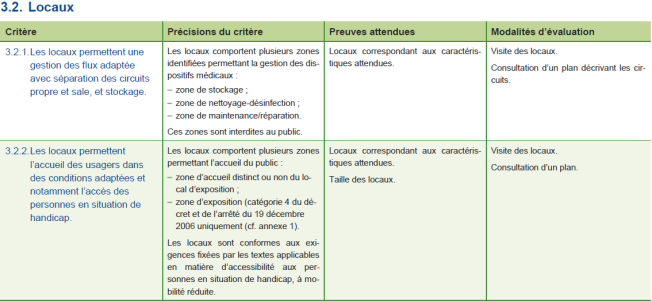
The requirements set out in sections 3.2.1 and 3.3.2 of the forthcoming PSDM certification framework (HAS – version dated 19 October 2022) are in line with this same approach to organisation and infection risk control, with a view to guaranteeing compliant and safe services (below is an extract from the working document on PSDM certification):
The Mobiwatch Commitment
At Mobiwatch, we support our clients through this regulatory transition.
Our Minibio systems, designed for automatic airborne disinfection and compliant with the EN 17 272 standard (for all pathogenic strains), fully meet the HAS’s requirements regarding hygiene, disinfection and traceability.
Our aim: to help you achieve PSDM certification whilst enhancing the safety of patients and staff.
PSDM certification is emerging as a necessary step towards further professionalising the sector and improving the quality of service provided to users.